Move Over Harriet: The Militant Mastermind of Jamaica You Weren’t Taught About
Let's be real: the American education system has a "type." Every February, they dust off the same three photos of Harriet Tubman, Rosa Parks, and MLK, pat themselves on the back for being "inclusive," and call it a day. But if you think the blueprint for Black resistance starts and ends at the U.S. border, you've been played.
While Harriet was making boss moves with the Underground Railroad, there was a Queen in the mountains of Jamaica who didn't just build a railroad—she built a whole fortress the British Empire couldn't touch.
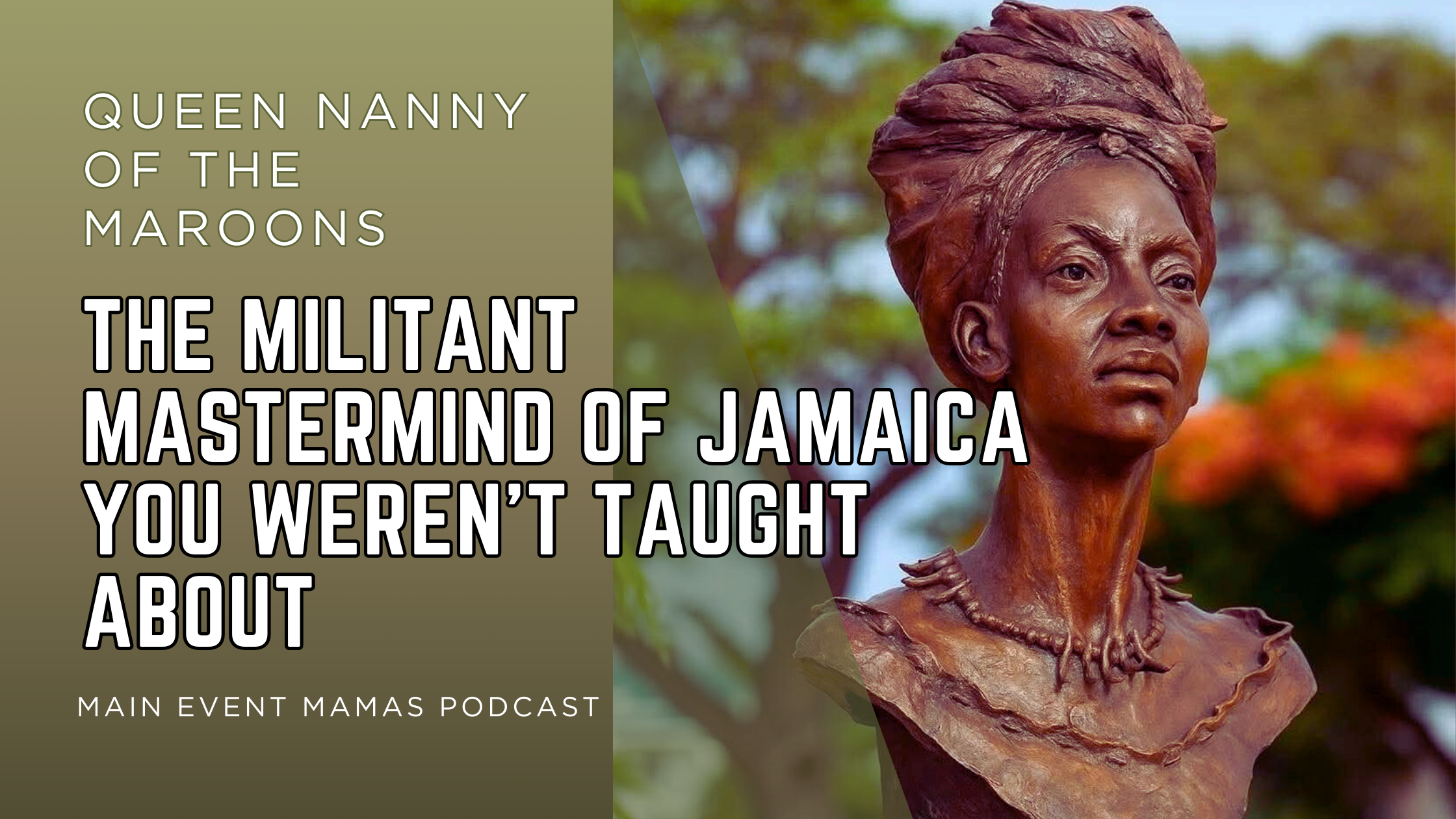
Enter Queen Nanny of the Maroons.
As Tanesha put it on the latest Midnight Confessions, it’s time to expand the guest list for Black History Month: "There was no Harriet Tubman... Someone else built their own [railroad]. And her name was Queen Nanny of the Maroons."
More Than Just a "Refuge"
We need to stop talking about slavery like it was just a period of "waiting to be freed." Queen Nanny wasn't waiting for anyone. She was an Ashanti woman who escaped into the Blue Mountains of Jamaica and led a community of formerly enslaved people known as the Windward Maroons.
She didn't just hide; she governed. She founded Nanny Town, a stronghold so strategically placed that the British—with all their "sophisticated" weaponry—looked like absolute amateurs trying to find it. This wasn't a camp. It wasn't a hideout. It was a fully functioning society built on resistance, resilience, and the refusal to bow.
Psychological Warfare & "Tree" Ambushes
Queen Nanny wasn't just a physical threat; she was a mental one. She used what Tanesha described as "psychological warfare and a spiritual science called Obeah." Imagine being a British soldier, trekking through the jungle, sweating through your wool coat, only for the literal forest to start screaming at you.
Nanny's warriors were masters of camouflage, covered in leaves and branches to the point of being invisible. As Tanesha noted, "They camouflage themselves as trees to ambush the British soldiers."
Read that again. Queen Nanny was out here turning her warriors into literal trees to ambush colonizers. That's not just "history"—that's a mood. That is the kind of tactical genius they don't want to teach your kids because it proves that Black resistance wasn't just about survival; it was about winning.
The International Queen of Resistance
Why aren't we talking about her more? Because Nanny represents a brand of resistance that isn't "safe." She didn't ask for a seat at the table; she burned the table down and built her own in the mountains. She was so effective that the British were eventually forced to sign a peace treaty with her people.
Let that sink in. The British Empire—the same empire that colonized half the planet—had to negotiate with a Black woman who refused to be conquered.
And yet, most of us didn't learn her name until adulthood. Why? Because the system is terrified of what happens when we realize that resistance doesn't have to be polite. That our ancestors weren't just enduring—they were strategizing.
I say all of this not to diminish Harriet Tubman, there’s no doubt that she is a legend. We honor her legacy every single day. But she’s not the only one. It’s time to give Queen Nanny her flowers—preferably the ones her warriors used to hide in before they took out an empire.
The Lesson
If the system only teaches you how to be "non-violent," it’s because they’re still afraid of the women who chose a different path. In a world that is consistently telling you who you should be, remember this. Stay bold. Stay unfiltered. And for the love of God, start Googling the Queens they forgot to mention in your textbooks.

Co-Host / Producer
Meet Kiara, the sass-talking, side-eye-giving co-host of Main Event Mamas. This wrestling fanatic has been body-slamming her love for the squared circle since before you knew what a Figure Four Leglock was (probably). Once upon a time, she swooned for the Heartbreak Kid himself, Shawn Michaels – don't judge, we all have our pasts.
But Kiara's more than just a pretty wrestling face. She's a total boss babe, juggling the chaos of entrepreneurship, PR wizardry, and social media magic. Oh, and let's not forget the real main event at home: a husband, two teenagers who are almost self-sufficient (hallelujah!), a furry menace of a dog, and a cat who probably judges us all. So, if you're ready for wrestling talk with a side of "been there, survived that" realness, you've come to the right place. Just try not to mention ladder matches around her – the PTSD is real.
Two Titans, One Ring: Why Roman vs. Punk Is More Than Just a Match